Poplar Allergy: Everything You Need to Know About These White Fluffs
When in April and May the streets and riverbanks in Croatia are covered with white, cotton-like deposits resembling snow, most people immediately point their fingers at one tree: the poplar. These white fluffs flying through the air have become a visual symbol of spring troubles. However, in the world of allergology, the situation with poplar is much more complex than it seems at first glance. While ambrosia hides in weeds, and birch pollen invisibly floats through the air, poplar announces its presence very aggressively and visibly.
The term allergy Croatia in late spring is almost inseparably linked to these white deposits, but science tells us that the real culprit is often not what we see. In this article, we explore all aspects of poplar allergy, debunk the most common myths, and explain how the pollen map can help you distinguish real danger from mere mechanical irritation.
Myths and Truths: Are the White "Cats" the Real Allergen?
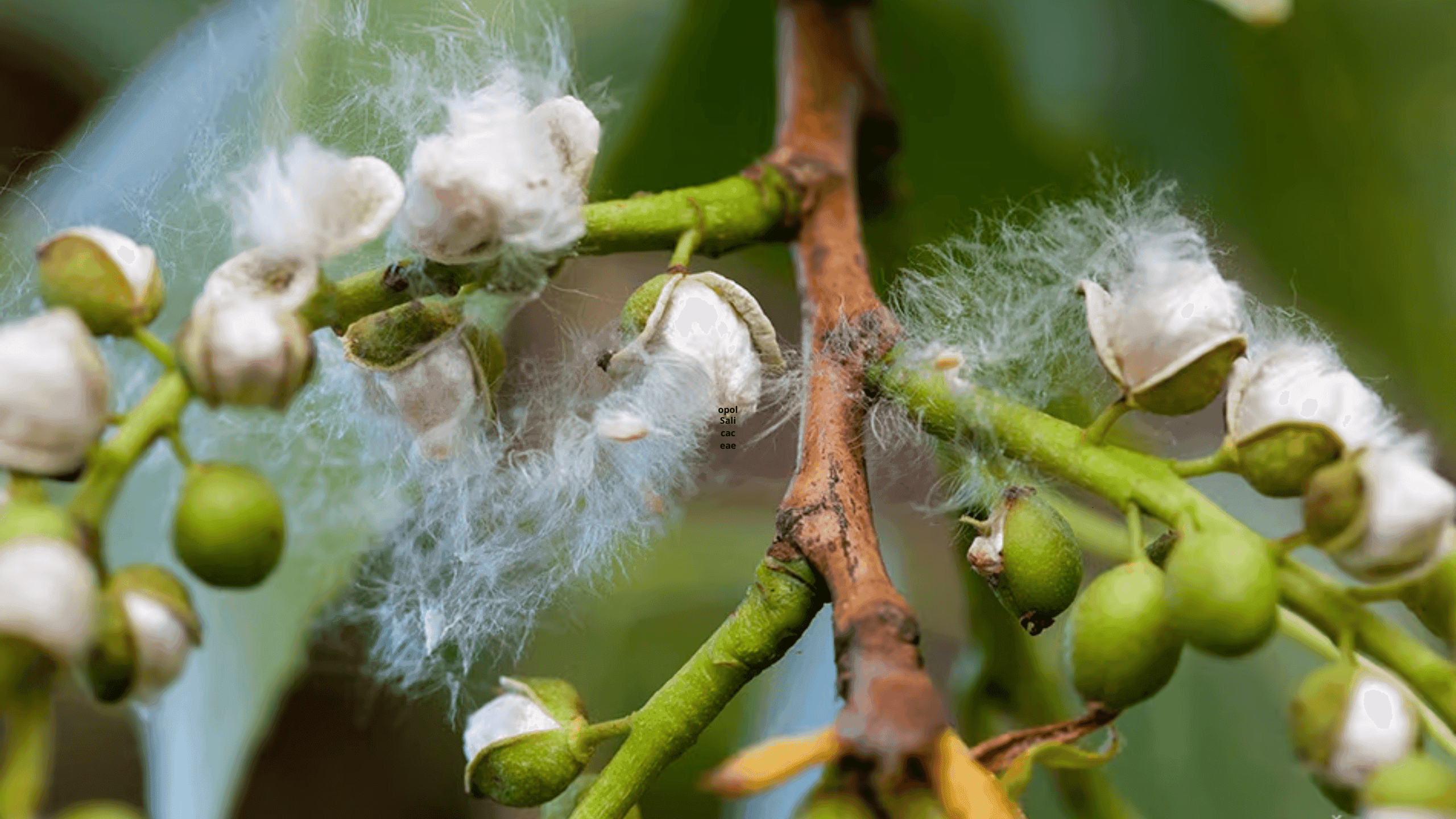
The biggest misconception related to poplar (Populus) is the belief that the white, cottony seeds we see flying through the air are the main cause of sneezing and watery eyes.
The truth is actually as follows: The white fluffs are actually poplar seeds wrapped in cellulose fibers to be more easily dispersed by the wind. These fibers are too large to enter deep into the airways and cause a classic allergic reaction. However, they act as a mechanical irritant and enter the nose and eyes, causing tickling and irritation, which people often confuse with an allergy.
The real pollen of poplar is microscopic and invisible, and the trees release it much earlier (usually in March and April), before the white fluffs appear. So, when you see the white fluffs, the actual season of its pollen is likely already coming to an end, but high concentrations of grass pollen, which are the true culprits of your troubles, are usually present in the air at that time.
Symptoms of Poplar Allergy
The symptoms caused by poplar allergy (whether its actual pollen or irritation from the seeds) are very similar to other pollen allergies, but with an emphasis on mucosal irritation:
Attacks of sneezing: Often occur in bursts as soon as you go outside.
Allergic rhinitis: Watery nasal discharge and a feeling of congestion.
Eye irritation: Redness, burning, and tearing, especially if white fibers physically enter your eye.
Itching of the face and nose: A "tickling" sensation that is specific to the seed dispersal period.
Worsening of asthma: In sensitive individuals, tiny particles that "stick" to the fluffs can cause a dry cough.
Allergy Croatia: Where Does Poplar Cause the Most Problems?
Poplar is a tree that loves moist habitats, so its presence in Croatia is strategically distributed:
Along riverbanks (Sava, Drava, Danube): Lowland Croatia, especially Slavonia and the vicinity of Zagreb, has huge populations of native black and white poplar. In these areas, the white deposits in May can look like real snowdrifts.
Urban environments: Due to their rapid growth, poplars were massively planted in city parks and residential areas built in the 1970s and 1980s. This is why allergies in cities like Zagreb or Osijek are so pronounced near older neighborhoods.
Embankments and recreational areas: Areas like Jarun or the Sava embankment in Zagreb become zones of high irritation in May due to specific microclimates and a large number of trees.
Why is the Pollen Map Crucial?
If you feel symptoms while the white fluffs are flying, be sure to check what the pollen map says. The results might surprise you:
You will often see that the concentration of poplar pollen is low, but the concentration of grass or oak pollen at that moment is very high.
The white poplar seeds act as a "transport medium" and collect grass and weed pollen on their sticky fibers, which are the real, invisible aggressors.
The pollen map helps you understand that you are not allergic to what you see (poplar), but to what you do not see (grasses).
Unconditional monitoring of the pollen forecast allows you to time your antihistamine intake correctly, as if you wait for the white fluffs to start your therapy, you are likely to be late by several weeks.
How to Survive Poplar: Protection Strategies
Although the white fibers may not be an allergen, they are extremely irritating. Here’s how to protect yourself from mechanical and pollen attacks:
1. Physical Barrier
Wear sunglasses, preferably those that fit closely to your face. They will prevent poplar fibers from physically entering your eyes. Also, wearing a mask in areas with a lot of poplar can drastically reduce the number of inhaled particles.
2. Hygiene After Entering the Home
When you return from a walk, your clothes and hair are likely "full" of invisible pollen and cellulose fibers.
Change clothes: Put your clothes in the wash immediately.
Rinse your nose: Using saline sprays mechanically washes the mucosa.
Wash your hair: This is crucial to avoid transferring pollen to your pillow.
3. Space Management
Although it is pleasantly warm outside, avoid ventilating your apartment during the day when the wind is blowing. The wind lifts deposits from the ground and brings them directly into your home. If you have air conditioning, check that the filters are clean.
4. Washing Pets
If you have a dog, its fur becomes a "storage" of allergens after walking through poplar deposits. Regularly wipe your pet with a damp cloth after each walk to prevent it from bringing irritants into the apartment.
Connection with Other Plants (Cross-Reactions)
People who are truly allergic to poplar pollen (which flies earlier) often show sensitivity to another related species - willow. Since both belong to the Salicaceae family, their proteins are similar. It is also interesting that individuals allergic to tree pollen may sometimes experience mild reactions to salicylates in food or medications, although this is rarer with poplar than with birch.
Why Don't We Cut Down All Poplars?
There are often calls from disgruntled citizens to cut down poplars. However, experts in Croatia emphasize that the benefits of poplars are enormous:
They are exceptional air purifiers and "absorb" large amounts of CO2.
They provide deep shade and cool cities during the summer heat.
Today, in urban planning, "male" trees that do not produce white seeds are used, reducing mechanical irritation in new neighborhoods.
Conclusion: Knowledge is the Best Antihistamine
Poplar allergy is often an example of how our senses can deceive us. While the white "snow" in May looks like the main culprit for every sneeze, the real danger usually lies in the invisible grass pollen that peaks at that time.
The key to successfully surviving spring in Croatia is in being informed. Regularly monitor how the pollen map changes, understand the difference between mechanical irritation from fibers and a real allergic reaction, and prepare in time. Just as ambrosia is a challenge in autumn, poplar is a (visual) challenge in spring, but with proper hygiene and medical support, this period can pass with minimal troubles.
Track pollen levels in your city in real time
Check pollen map